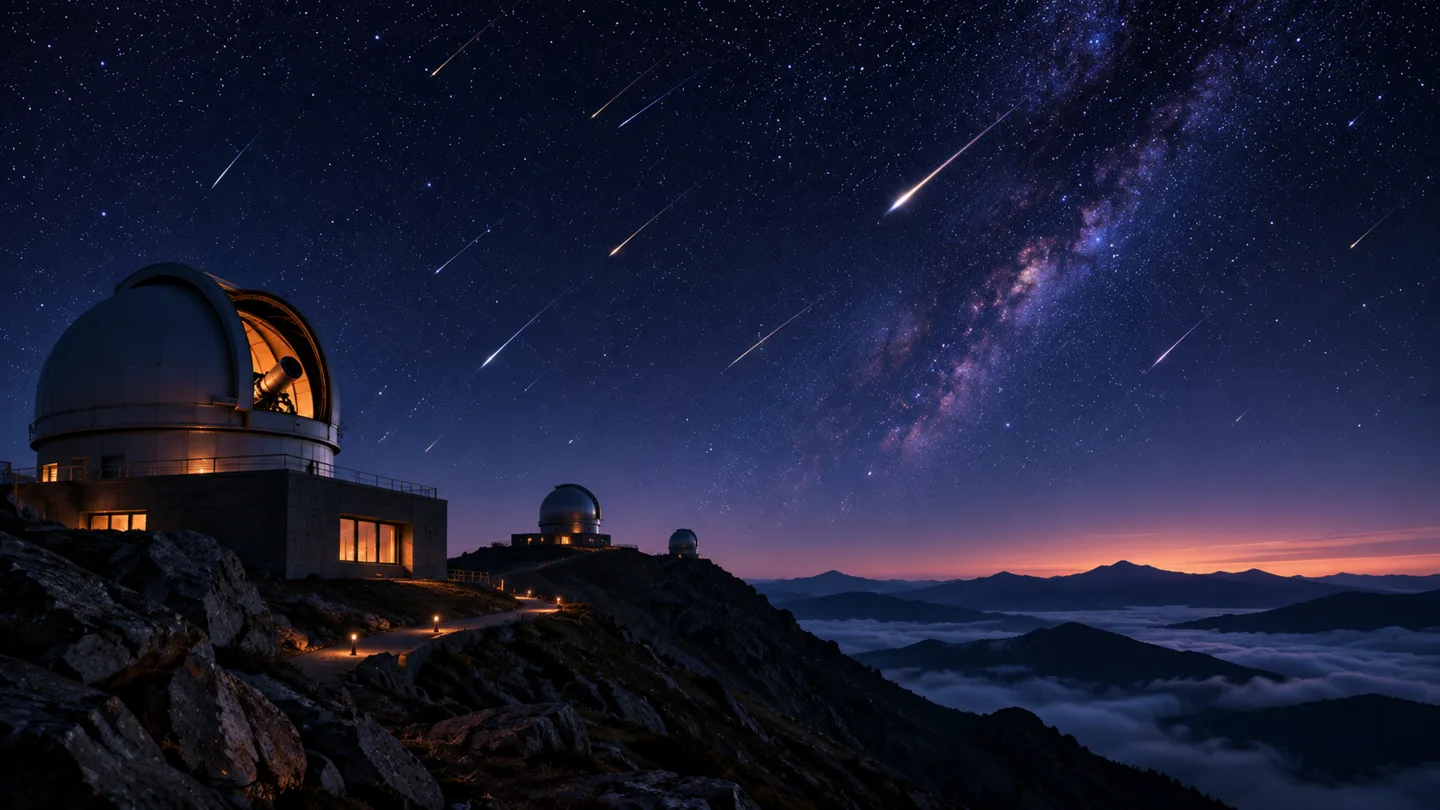
A published maximum is a forecast for a meteor stream, not a promise that a particular place will see a specific number of meteors. Clouds, moonlight, artificial light and the height of the radiant all affect what you can see.
Start with the source date
The International Meteor Organization publishes annual calendars with activity ranges and predicted maxima. Check the year and whether a time is expressed in UTC. A peak may occur during daylight in your location; useful observing can occur on surrounding nights while a shower remains active.
Use a clear, safe view
Find an observing site with a broad view and safe access. Allow your eyes time to adapt to darkness and avoid staring at a bright screen. A reclining chair and warm layers can be more useful than a telescope for watching a wide area of sky.
Account for latitude and timing
A shower’s radiant can be below the horizon or too low for much of the night. Our calendar uses the latitude of a named reference city to filter a geometric possibility; it does not compute a local observing forecast or guarantee darkness at the peak.
Write down what you actually saw
Record the time, direction and conditions. Keep your observation distinct from the published forecast; a clear night with few meteors is still useful information about that session.
Open the country and month calendar